If you’re anything like us, then you love orthodontic treatment! Wait…maybe that is just us. Well, we’ll bet you love smiling! And nothing does better for your smile than top-notch orthodontic care like the kind you’ll get from Dr. Jay and the team at Durham Orthodontics! But what’s the best way to handle discomfort after getting braces? Well, we’ve got plenty of experience with that, so read on!
The Adjustment Period
The first few days after getting braces are often the most noticeable. Your teeth feel different, your bite changes slightly, and there’s a new awareness of the small brackets and wires inside your mouth. For many patients, this mild soreness or pressure is unfamiliar, but it’s also a normal part of the process.
Braces work by applying a gentle, consistent force to guide teeth into better alignment. That steady pressure is what creates your new smile. It’s natural for the teeth and surrounding tissues to react for a few days as they begin to move. This reaction isn’t damage or distress; it’s your mouth adjusting to healthy change.
The first thing to keep in mind is the fact that early discomfort doesn’t last long. Within a week or two, most people forget they’re even wearing braces. The key is understanding what’s happening and knowing how to handle those first few days with simple, effective care. When you know what to expect, the adjustment period becomes much easier to navigate.
Why Braces Cause Discomfort
Braces work by encouraging your teeth to move. The feeling that follows isn’t a sharp or constant pain; it’s more like tenderness after a workout, a sign that something is working and changing.
Your Teeth Are Adapting
When brackets and wires are first placed, they begin guiding teeth into better alignment. This movement triggers a biological response in the ligaments and bone that support your teeth. The body responds to pressure by creating new bone tissue where it’s needed and reshaping the old bone where it’s not, which is a process called remodeling.
That’s why soreness often peaks around day two or three, then fades as your body adjusts. During this time, it’s best to stick with soft foods and gentle routines. Within a week, most of that tenderness has eased.
Soft Tissue Sensitivity
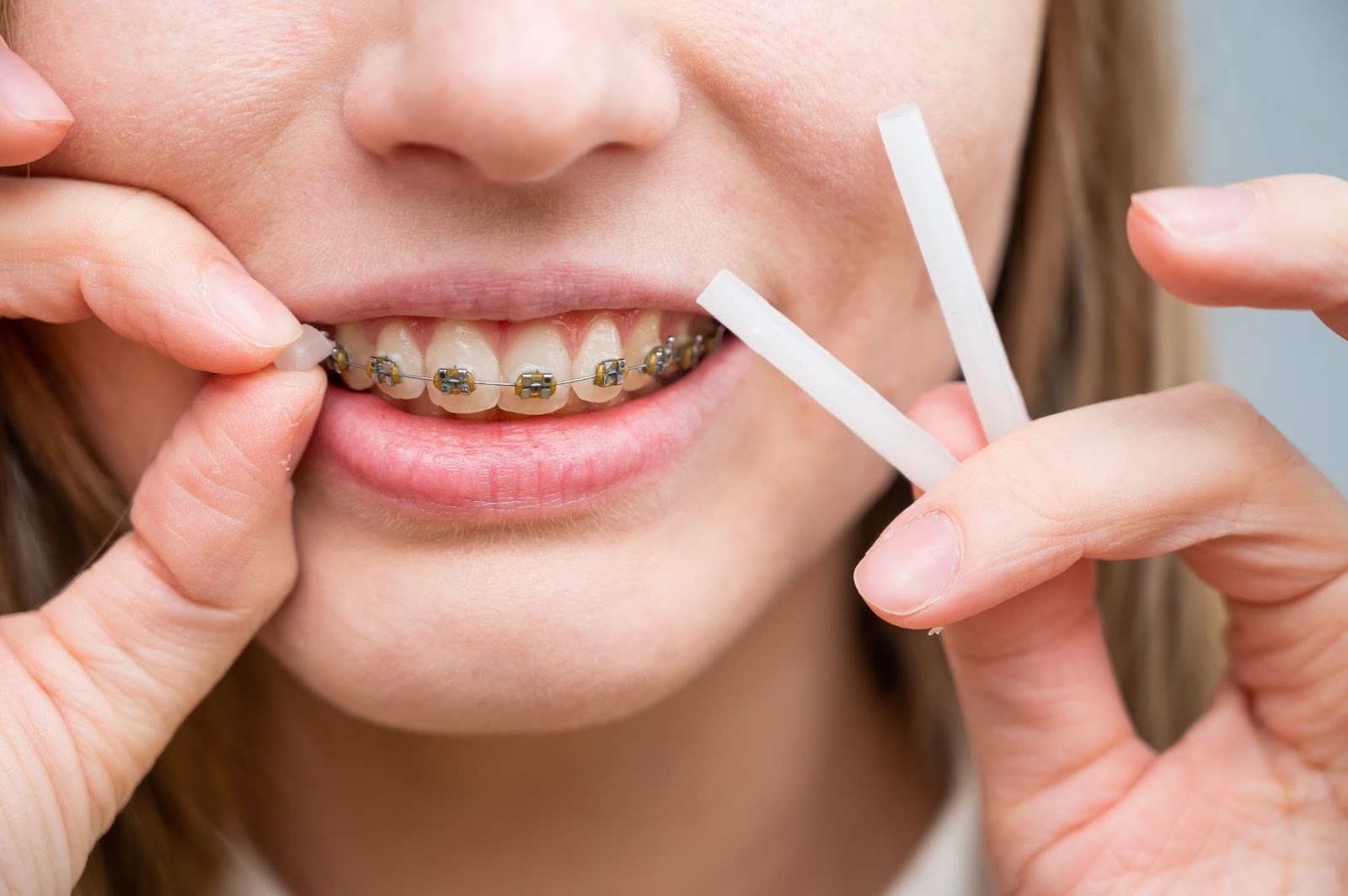
Your cheeks, lips, and tongue are also adjusting to new surfaces inside your mouth. The edges of brackets and wires may feel unfamiliar and can cause slight irritation until the skin toughens. Using orthodontic wax can prevent rubbing in those areas: just roll a small piece between your fingers and press it onto the bracket that’s causing discomfort.
Saltwater rinses also help the soft tissues heal faster. Mix half a teaspoon of salt in a glass of warm water, swish gently, and repeat several times a day. These simple habits can make a noticeable difference within 24 hours.
Normal vs. Concerning Pain
It’s important to distinguish between expected soreness and something that needs attention. Dull pressure or gum tenderness is perfectly normal. Sharp or persistent pain, a wire poking into the cheek, or a bracket that feels loose warrants a quick call to Durham Orthodontics. Most issues can be fixed in minutes, and addressing them early prevents irritation from becoming painful.
For the vast majority of patients, discomfort is mild and temporary. By the end of the first week, your mouth will already feel stronger and more used to the new appliances.

Practical Relief Tips for the First Few Days
Even though soreness is temporary, there are plenty of ways to make those first days more comfortable. The key is to manage inflammation, protect tender areas, and keep eating and hygiene simple.
Cold Helps More Than You Think
Cold temperatures naturally calm inflammation and dull sensitivity. Drink cool water throughout the day, or let a small piece of ice melt slowly near the sore areas of your mouth. Soft, chilled foods like smoothies, yogurt, or cold applesauce can also help. Many parents find that a homemade fruit smoothie works wonders for kids adjusting to new braces: it’s soothing, nutritious, and easy to eat without chewing.
If you prefer a more direct approach, a cold compress on the outside of your mouth can provide relief, too. Wrap an ice pack in a clean cloth and hold it gently against the sore area for a few minutes at a time.
Salt Water & Gentle Cleaning
A warm salt-water rinse is one of the easiest and most effective remedies for sore gums and inner cheeks. It’s natural, inexpensive, and safe for kids and adults alike. Combine half a teaspoon of salt with a glass of warm water and rinse several times a day.
At the same time, keep your braces clean. It might be tempting to skip brushing when your mouth feels tender, but good hygiene prevents swelling and speeds recovery. Use a soft-bristled toothbrush and move gently around brackets and wires. The goal is not perfection, just consistency. Clean teeth and gums heal faster and feel better.
Pain Relief if Needed
If soreness becomes distracting, an over-the-counter pain reliever can help. Medications like acetaminophen or ibuprofen are safe when used as directed and can take the edge off for the first day or two. You likely won’t need them for long.
Remember that soreness fades quickly once your body adjusts. By week two, most patients describe the feeling not as pain but as awareness, a sense that something is happening beneath the surface. That awareness soon turns into the quiet progress of a smile taking shape.

Give Us a Call!
Still have questions? Give us a call at our Madison office! We’re always here to help, and supporting you in your journey with orthodontic care is our privilege and our pleasure. Need to get started? You’re in luck, because consultations are always free at Durham Orthodontics.
We’ll see you soon!